
The Victim as Witness
Legado en los huesosThis flow traces how Amaia’s uneasy belief in victims’ dreams becomes a disciplined way of reading evidence, linking intuition to forensic inquiry without fully resolving the supernatural.
increasing Bearing strength in each event
 decreasing
Bearing strength in each eventdecreasingThe First Message

A Message Beyond the Case
An Insistent Word
Jasón Medina dies before his trial, leaving Amaia Salazar a single word: “Tarttalo.” Teniente Padua sees a possible connection to the earlier Basajaun case, while Amaia initially resists turning an eerie coincidence into an investigative premise.
The word matters because it arrives as both a threat and a puzzle. Its mythic resonance points toward a local imagination in which violence may wear an ancient face, but the note alone cannot establish who wrote it or why.
The Detective’s Doubt
Amaia’s hesitation expresses the novel’s recurring tension between rational procedure and forms of knowledge she cannot comfortably explain. She accepts the evidence of a message while refusing to treat its apparent symbolism as proof.
That restraint gives her later intuition weight: she does not simply believe every uncanny impression. Instead, she tests impressions against bodies, records, testimony, and the recurring details that ordinary case boundaries have kept apart.
Dreams as Incomplete Evidence
The Unfinished Testimony
The Dead at the River
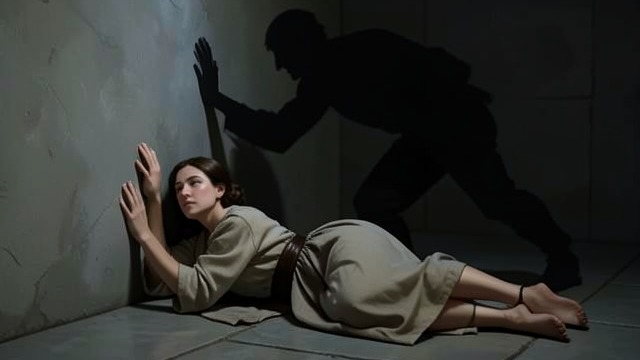
During childbirth, Amaia dreams of dead girls along the Baztán River and hears an urgent command to cleanse it. Later, Lucía Aguirre appears to her in another dream, repeating words Amaia can barely make out. The visions are frightening, yet they behave less like answers than fragments of testimony.
Amaia remembers Aloisius Dupree’s account of dreaming about victims: the mind may be assembling information that conscious attention has not yet recognized. His explanation gives her a practical way to listen without claiming certainty about ghosts.
From Image to Inquiry
The dreams acquire force when material evidence catches up with them. Lucía’s body, wrapped in the same distinctive sweater Amaia saw in sleep, confirms that the image was connected to an actual unresolved crime, though it does not prove the apparition was supernatural.
The novel leaves both possibilities active. Amaia treats the dream as a prompt to look again, not as permission to abandon forensic standards; the victim’s imagined speech becomes useful only when it helps direct attention toward verifiable facts.
The Meaning of Listening
Listening to the Silenced
Bodies That Speak
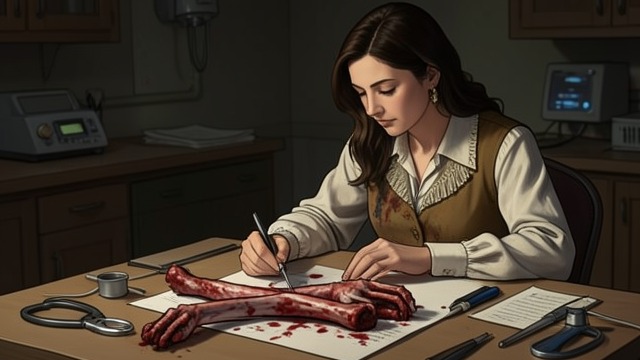
Amaia and Jonan Etxaide repeatedly insist that the dead are not merely the end products of a criminal’s design. A body can reveal the victim’s choices, the offender’s habits, and the points where an apparently coherent account breaks down.
The severed arms are especially significant because they recur across cases whose perpetrators appear unrelated. Their absence from the crime scenes and their careful removal suggest an intelligence that the confessed killers’ chaotic behavior cannot explain.
Intuition Under Discipline
This approach makes victimology an ethical as well as technical practice. It redirects attention from the spectacle of the murderer toward the person harmed, while insisting that interpretation must still be tested against trace evidence and independent records.
The victims’ “voices” therefore emerge through a combination of attention, comparison, and restraint. Amaia’s dreams may sharpen her listening, but the investigative meaning of those dreams depends on the physical evidence that can confirm or challenge them.
The Unanswered Voice
The Question Beneath the Question
A Call in the Dark
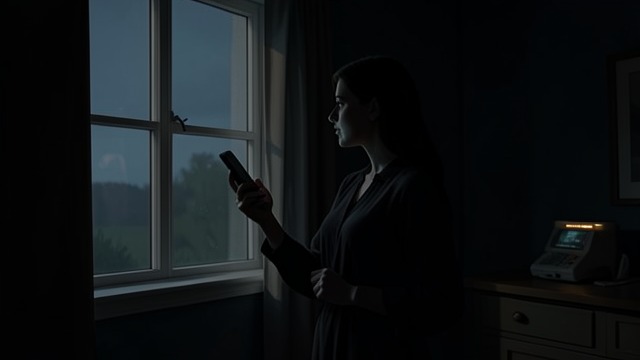
At Mantecadas Salazar, Amaia tries to ask whether her twin sister might still be alive. The conversation with Aloisius Dupree turns uncanny: the connection seems to exist outside her phone’s ordinary records, and his answer arrives as a certainty rather than an evidentiary explanation.
Dupree tells her that the twin is dead and presses her to recognize that she already knows. The exchange unsettles the boundary between remembered trauma, subconscious inference, and contact with the dead, but it does not provide a conventional chain of proof.
Knowledge Without Closure
Amaia’s later discoveries establish the twin’s birth and the concealment of her death, giving the dream-child a historical referent. Yet no body is found in the coffin, and the evidence does not answer every question about what happened to the infant.
The novel allows the dead to communicate while preserving the limits of what can be known. Amaia receives direction and emotional recognition, not a complete account; the mystery remains partly open even as the investigation advances.
A Method of Attention

Between Proof and Presence
Two Ways of Knowing
Amaia’s work moves between laboratory results and forms of perception that resist measurement. DNA links old remains to living people; dreams, inherited customs, and the landscape suggest where to search and what patterns may matter.
Neither mode simply replaces the other. The forensic findings constrain interpretation, while intuition helps Amaia notice why a particular clue deserves attention in the first place.
A Partial Resolution
At the conclusion, Amaia returns the recovered bones to the family burial ground. The act offers respect and a measure of repair, but it does not restore the sister whose death was hidden or erase the childhood fear that shaped Amaia’s life.
The ending treats investigation as a practice of responsible attention rather than total mastery. Some truths become demonstrable, others remain uncertain, and the dead can be honored even when their stories cannot be made whole.
At the opening, after Jasón Medina’s courthouse suicide
During Amaia’s labor and the first weeks after returning to work
As the linked murders become a recognized series
Near the end, when Amaia calls Dupree from Mantecadas Salazar
Across the investigation, culminating in the final recovery of the remains
